NEWS & EVENTS
Jersey Water Works 2026 Conference

Learn, Network, and Golf – Register Now! Howard J. Woods, Jr. Fall Meeting & Golf Outing

EPA extends comment period on PFAS biosolids guidance
NEWSLETTER & ANNOUNCEMENTS

NEW JERSEY INNOVATION FELLOWS PROGRAM
Save the Date: Jersey Water Works Annual Conference at NJIT – December 8, 2026

Need
New Jersey faces significant challenges with PFAS (per- and polyfluoroalkyl substances), often called “forever chemicals,” contamination in water, wastewater, soil, and the environment, posing serious health risks including increased cholesterol, liver damage, thyroid disease, changes in the immune system, and certain cancers. The state's densely populated regions and industrial history contribute to high PFAS levels. While New Jersey has regulations and is working to address the issue, the costs of monitoring, cleanup, and potential higher water rates for consumers are a concern for utilities and residents. Utilities face the burden of monitoring, reporting, and potentially cleaning up PFAS contamination, while also navigating the costs associated with these efforts. While New Jersey has regulations and is working to address the issue, the costs of monitoring, cleanup, and potential higher water rates for consumers are a concern for utilities and residents.

Strategy
The New Jersey PFAS Partnership Innovation Consortium (NJ PFAS-PIC) will establish a collaborative strategic stakeholders partnerships based ecosystem to develop innovative technology solutions with advance translation, scaling and community validation to address critical needs in PFAS contamination detection, remediation, decontamination and management, and develop novel alternative materials to be used in consumable products for reducing and managing PFAS contaminations for societal benefits and economic impact. The collaborative partners with the consortium include academic researchers and innovators from NJIT, Princeton, Rutgers, Stevens and Rowan; industry leaders with potential participation from investor owned utilities and engineering firms - Veolia, AECOM, Langan, and T&M Associates; state government and regulatory agencies including NJDEP, NJEDA and NJCSIT; and public government run utilities companies and commissions - Ridgewood Water, Jersey Water Works and others. Additional expected partners to NJ PFAS-PIC include Revive, Allonia, American Water, Arcadis, Carollo, Resin Tech, Mott McDonald, Colliers, Passaic Valley Water Commission, , Atlantic County Utilities Authority, Brick Utilities., and consulting companies.

Resources and Assets
The New Jersey Department of Environmental Protection (NJDEP) is actively monitoring and testing water systems, wastewater, soil and environment for PFAS contamination. Academic researchers from 5 leading universities in NJ have innovated several advanced technologies for PFAS rapid detection, monitoring, decontamination and management but lack translational field validation and feasibility studies for meaningful deployment in communities with regulatory compliance and guidance from NJDEP, NJEDA, NJCSIT and EPA. In addition, there are technological and commercial assets available with global and regional industry having strong interest in collaborating with NJ universities, regulatory agencies and utility companies to test innovative technology solutions for scaling, compliance, and commercialization feasibility for effective deployment toward community benefits and economic gains.

NJ PFAS-PIC Collaborators and Partners
More than 40 institutions, industry, utilities and state organizations have actively participated in the CTR PFAS Workshop. They are expected to provide commitments to continue developing collaborative synergy and partnerships for the proposed NJ PFAS-PIC through their direct involvement in the STRIP PFAS Focus Groups.





BACKGROUND
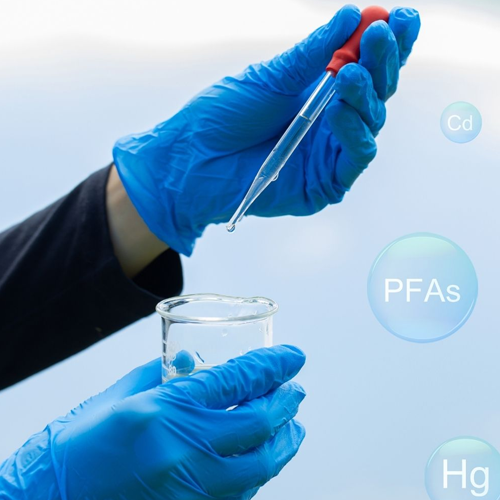
PFAS (per- and polyfluoroalkyl substances), often called “forever chemicals,” are found in everyday products and persist in water, wastewater, soil, and the environment, posing serious public health risks including increased cholesterol, liver damage, thyroid disease, and changes in the immune system.

STRATEGIC APPROACH AND INNOVATION
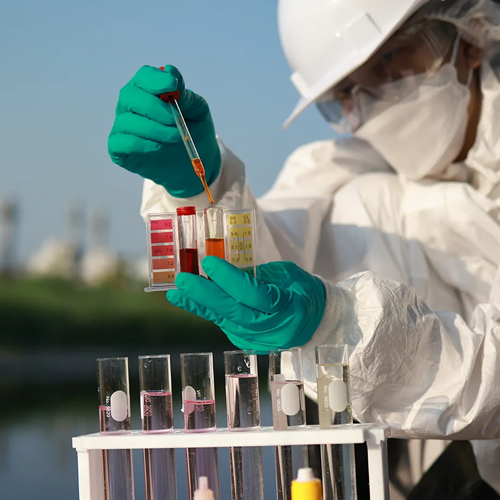
The proposed NJ PFAS Partnerships Innovation Consortium (NJ PFAS-PIC) will build on the tremendous collaborative synergy and commitment from all stakeholder groups to develop the university-industry-government-community ecosystem to focus on innovation translation to market and communities for technology validation, scaling, manufacturing, and adoption by the communities for greater societal and economic benefits. .